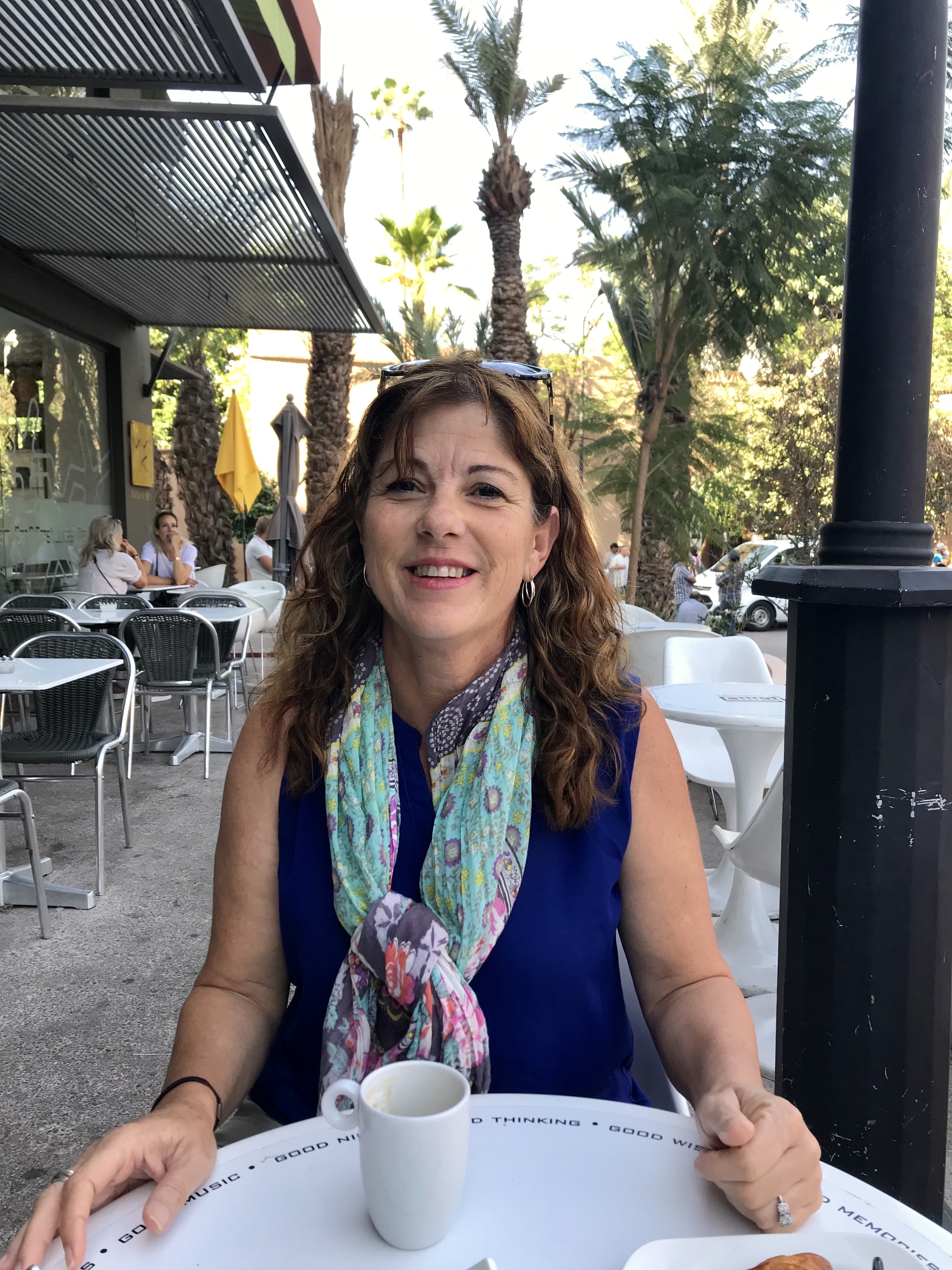
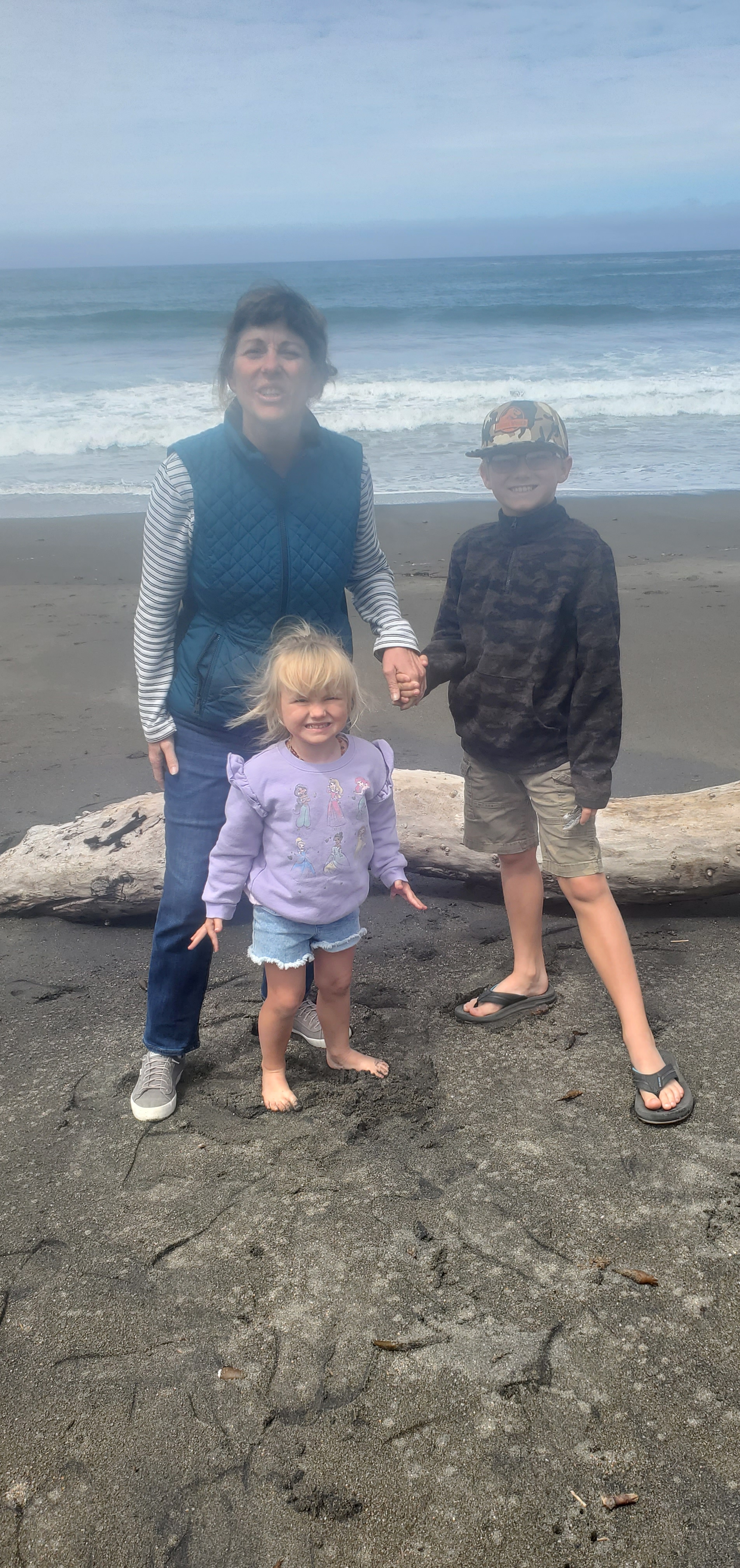
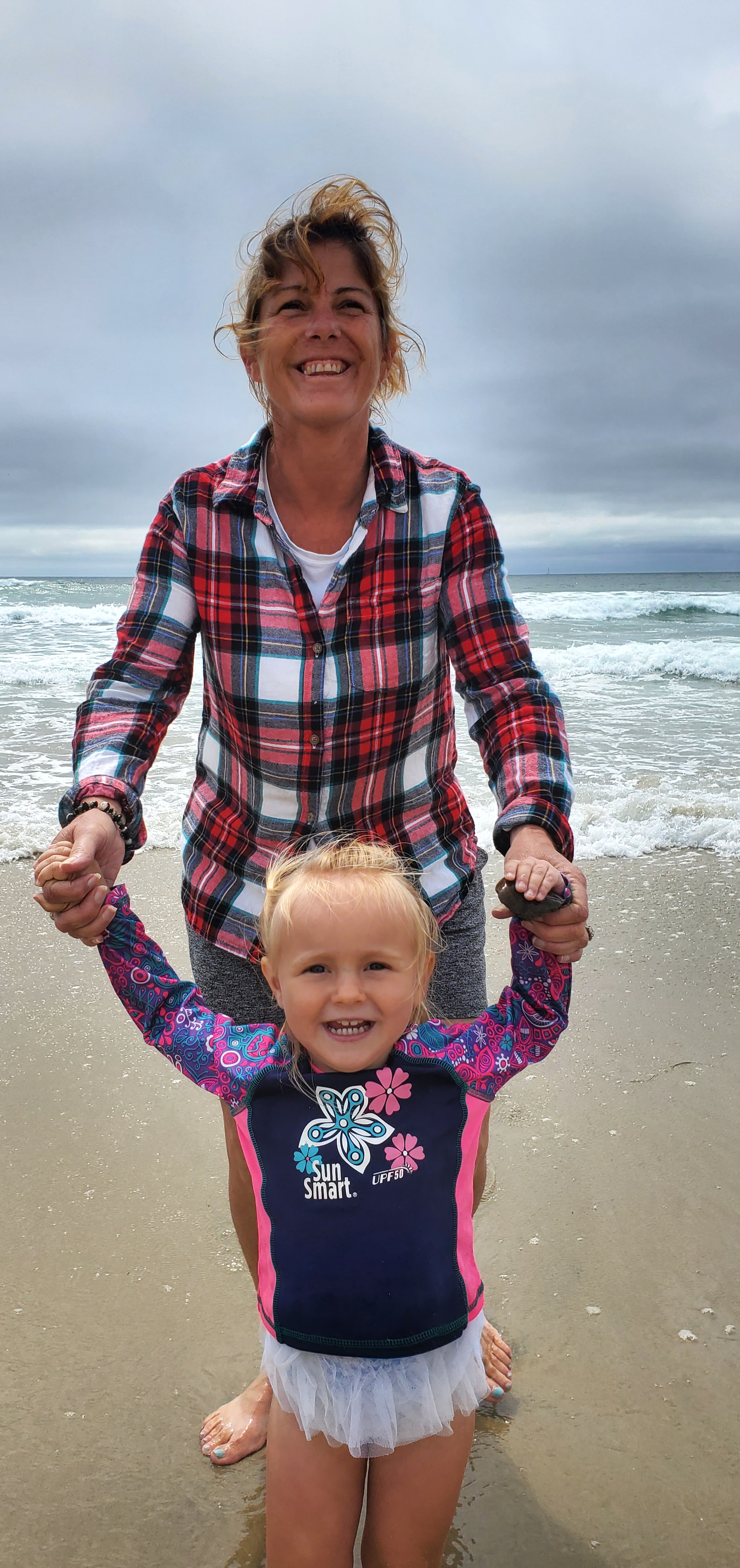
A Belated Update. Valerie – 1969-2024

It was about a month ago I realized I had forgotten to update this site. Valerie (ToughGalVal) succumbed to her frontotemporal dementia (FTD; Pick’s disease) and passed away on November, 12, 2024. I and a few family members were there in the room with her when she passed. Since her seizure in August, her mobility took a nose-dive and her appetite disappeared. (or ability to eat). By late October, she had lost weight and was in bed. I think October 5 was the last time we visited her while she was in a wheelchair. We still visited weekly, but the situation was clear. – she wasn’t going to last much longer.

The last two days of her life were something to behold. I consider myself fortunate to have been there and to hold her hand and to be with family for the moment. The past several years seem like a decades long event, rather than just a few years. Valerie first showed signs of her disease in late 2018. So, six years was the duration., which is, I think, common for FTD. We were fortunate to be able to provide Valerie with the care she needed at the different times. I can only imagine how those without resources manage.

Before Valerie passed away, I had never been in a room with someone who was dying. To see her pass was something that did help bring a little closure. But she was so young so there is of course a lot of emotions about seeing someone who was so vital be taken down relatively quick by this brain disease. Dementia is awful for those who have it, and for those around that person. There can be no reasonable conversation between the sufferer and their family. Nobody can say what the journey is for the dementia patient – what are they seeing, what are they hearing? But we can say to some degree what it’s like for the family and friends. It’s not pleasant, to say the least. Valerie was tough. Caregivers are tough, too. I may post again here or I may not. I am not sure what I will do with ToughGalVal’s story, through my eyes or my experience. It will probably be years for me to process. But now, I have memories of Valerie and time with her family, still.

Overdue Update! – Sept 2024

Friends and Family of Valerie, you’re overdue for an update. You have all been so generous, and I (mark) apologize for being lax in updates. It’s honestly tough to update about Valerie’s house, when it seems to be deteriorating so fast, but in slow motion. There are days and weeks that are drama, and then quiet weeks. I cannot believe it’s been over 2 years that Valerie has been at Sydney Creek. She has been ill with FTD/progressive aphasia for over 6 years.
As of mid-August 2024, Valerie is back under hospice care (third time!). This follows a severe seizure she had which has diminished her physical abilities in terms of standing and walking and energy level. A lot more napping, and is managed with a wheel chair to move from room to dining area. Hospice care for Valerie means more eyes on her, more flexility on medicine for pain and equipment like the wheelchair and hospital bed.

Valerie is less verbal, but in the past two weeks has managed some words and smiles. In Jan 2024 she was moved to a smaller unit for her safety, in terms of more caregivers on hand and less room for injury from tripping. She still has her moments, but she’s had only a few instances as compared to last year where she had several severe falls.


(a side note about her appearance: her hair is so black, short now with curls. Very French. She is thin, with all of last year’s walking).
Valerie’s birthday is this month – in about 2.5 weeks. She’ll be 55, enduring a cruel disease with the same grace she’s had since it started.

https://gofund.me/996f150d

Now the sales pitch. The expense for Valerie to remain at Sydney Creek is enormous – nearly $7k a month and so since this is GoFundMe, I have to ask with all humility for your help. Donations to Valerie help her and her family cover the monthly bill. The money goes direct to her bank account used for her rent. I know money is tight for a lot of people, so any amount is welcomed. Every little bit helps, believe me.

https://gofund.me/996f150d


While she can’t say it, I know Valerie would appreciate yourhttps://gofund.me/996f150d help, as prideful as she can be, as it helps to keep her in a facility where she is comfortable and safe with amazing staff to help her with everything. And if you have any questions, feel free to ask.

Welcome

This site exists to help Valerie, who is living with advanced dementia (frontotemporal dementia, ftd). Her brother Mark is writing it. Maybe we will raise some money for her future care. Maybe we will share stories and images as she and her family travel this journey together. There is no good age to get dementia, but Valerie is in her early 50s and that young age creates a whole new set of challenges. I hope by reading about Valerie you find some help through the links and some comfort knowing that you and so many others are not alone when it comes to dealing with a dementia-based illness. It’s a tough road ahead.

At the Atascadero Charles Paddock Zoo, March 2022, after a walk around the lake.

The Inevitable Fundraising Post – let’s help Valerie!

When Valerie was accepted to live in a memory care facility, it was both good news and sad news. Good news in that she would get more care than we could provide. Sad news in that it was a stage for her and her disease that only confirmed the direness and finality of her situation. Remember, FTD affects many younger people in their 40s, 50s, and 60s. There are not a lot of options for these people. In home care is expensive and usually, at some point, reaches a point where it’s impossible to safely care for the person.

Memory care facilities typically house older patients suffering from Alzheimer’s disease. Whether or not they can take in a younger, more energetic person with FTD is, I’m guessing, decided on a case-by-case basis. For Valerie, we were fortunate to find a facility that understood the challenges in caring for Valerie and took them on. They were patient with us in interviews and in getting paperwork. Getting her into a place was a miracle, really. A really expensive miracle.

GOFUNDME – Make A Difference for Valerie, FTD fighter

The gofundme campaign we’ve started will hopefully offset some of Valerie’s rent at the memory care facility. If you prefer to use PayPal or Venmo, that is fine also. No amount is too small. Valerie, and indirectly her family supporting her, need all the help we can get.

If you have any questions about how the money is used, or questions about Valerie’s condition, feel free to message me. All the money will go into Valerie’s (new) bank account which is audited by SLO County court officials, as she is now a conservatee of me and her sister Lori.

You can also send money via PayPal to markw24 [at] gmail. com or Venmo to @Mark-Wiberg-1

Memory Care Visits 101

It’s been a minute since I posted. Actually 3 months of minutes. I’ve been busy. We’re all busy. Valerie’s family has been busy. And exhausted. I’ll talk about exhaustion some other time. (when I am less…exhausted!).

For many with dementia, a safe, secure facility becomes necessary. A memory care facility.provides the staffing and room and care for someone typically in advance stages of dementia. The age of the person may vary. For those with Alzheimer’s, they tend to be older. For those with other dementias (like FTD), a patient could be younger, making it tougher to find a place. Since each city/region has different resources, and each patient has different circumstances, I won’t go into ‘how to find a facility’, except to say first find a senior living consultant as a first step. And yes these places are crazy expensive and perhaps one day I will post about that.

But once someone you love is in a memory care facility, settled in, what do you do? You are an advocate, as I was reminded recently, so that is your job. To make sure your loved one is being cared for as best as possible, given the circumstances. Simple things, like making sure her favorite pair of shoes haven’t been moved to another room. Or that photos remain in their room. Or basic hygiene is being maintained. As wonderful and hardworking as the facility staff may be, it is up to you to provide that extra oversight and speak for your loved one on matters that you find.

But, being a relative newcomer to visiting a memory care facility, here are some BASIC FACTS that I think will serve you well when you visit your loved one.

  1. Bring a snack. The facilities serve three meals a day and have snacks in between, but they may not be able to satisfy your loved ones snacking ways. Some facilities provide snacks, but don’t hesitate to bring in a favorite snack (cookie, granola bar, etc….nothing stinky and of course nothing that goes against any prescribed dietary plan).
  2. Bring a sharpie pen. Have a sharpie pen on you at all times. A person living in a memory care facility will have their names written on everything (clothes, shoes, water bottle, books, etc…). If you find an item in the room of your loved one, and it is unlabeled, you can label it and claim it as your own. Free stuff! Just kidding.! That’s called stealing. It is considered bad form to steal at memory care facilities. The pen is for when you find you overlooked marking the items that do belong to your loved one. By the way, when you find an item missing from the room, do not panic. It should turn up. Just alert the staff. It happens often that a sweater or shoes or picture frame gets moved away from the room into someone else’s room. The other day Val was wearing someone else’s sweater – she didn’t mind. It was a nice sweater. Eventually it’ll make its way back to the correct owner. This is also a reminder to never bring into the memory care facility anything valuable or sentimental. There is always the chance it is lost or damaged.
  3. Short visits are fine. I am fortunate to leave nearby the facility where Tough Gal Val is living. This allows me to visit more frequently than other folks do, I imagine. However, I have learned that long or short visits both serve the same purpose: to check in on the well-being of my sister, to make sure things are in order in her room, that she looks good and healthy. The first ten or fifteen minutes is spent doing just that. Being the advocate, taking notes of things to address to the management if there are any issues. The remainder of the visit is spent being a brother, visiting, or what counts as visiting (listening, talking, walking). The instinct is to stay as long as possible of course. To not leave your loved one alone for any amount of time as possible. But the reality is, the nature of the disease is such that they do not clock time like we do. Each patient is different of course. The thing to remember is not to feel guilty for a short visit. These visits can be tough, emotionally draining, so sometimes a short visit is okay. My own experience – my visits last from 15 to 60 minutes. It really depends on how engaged she is.
  4. Addressing concerns. We got great advice a few weeks ago. When we find an issue that needs correcting (like a lost item, or something needs to be fixed in the room), we bring it up to the workers at hand, but we follow up with an email to the management. This communication helps everyone there know that there was an issue. The workers/medtechs on the floor have enough on their plate. They will fix/acknowledge the issue, but they may not remember to bring it up with the team or management. They have a tough job, and often dozens of patients to tend to. So, send an email to the directors with your concerns. That way it is on record for them to address with the entire team. If you do not email, then the issue may repeat itself.
  5. Call in. If you can’t visit often., then call in. Your loved one may. not be able to hold a phone conversation, but you can at least call the directs/nurse in charge and ask how your loved one is doing. You will hopefully get a sense that those you talk to you have a clear idea about your loved one’s care and current well-being. They might provide generalizations but a phone call or email is better than nothing. And making the effort to call or email will make you feel better. Of course if the responses you get are worrying, then that informs your decision to perhaps move a visit up sooner.
  6. Bring an activity. Sometimes the rooms are locked up or their roommate is in the room and you do not want to disturb them. This means your loved ones activity items (books, photos, etc) are out of reach for your visit. So bring similar items to your loved one during your visit. Be sure to take them with you when you leave. This will most likely be phonebooks, coloring books/pens, an object that brings comfort to the loved one.

Your experience visiting a memory care facility will vary, even within the family. My concerns sometimes vary from my other family members who visit. That is normal. We can observe things differently or have different priorities when it comes to the care of someone in a memory care facility.

Welcome to Frontotemporal Dementia, Stay awhile, you might learn something.

This post is meant to sort out this WordPress theme I am using and to figure out pages and posts. But I won’t leave you hanging. My sister has advanced dementia and in the 3 months we’ve been caregiving for her, we’ve learned a few things.

Ombudsman – whatever county you live in, search that county with the word ‘ombudsman’ and you will be directed to a volunteer organization that provides great information related to dementia and facilities (nursing homes, memory care, residential board & care) – they should know everything there is to know. And they can point you to other resources when it comes to other issues, such as medical insurance, financial assistance, in-home care. Remember it: OMBUDSMAN. I had never heard of this group until March 2022. I have called them multiple times since then and they have always been patient and helpful.

Memory Care facilities: They do not take most insurances. Possibly long term care insurance but you would have to purchase this years before your diagnosis, so good luck. Most memory care facilities are going to be private pay and can be anywhere from $3k a month and up, depending upon where you live. In California, $5k and up. So if you plan on getting dementia, get rich first.

Project Lifesaver: again, I had never heard of this organization because I had no need to hear of it. Project Lifesaver provides tracking devices so that your local sheriffs office and utilize their resources and find your loved ones quickly should they wander off. There is a monthly fee, but it’s worth. The radio technology is better than ‘off the shelf’ type of trackers like Tile. It’s something to have that hopefully you never need to use. My sister has a project lifesaver bracelet and guess what? She tries to remove it, as some will often do. You don’t want to lose these devices. I just tell her to leave it alone on her arm, that it’s for her safety. He daughter decorated the bracelet, which is by itself pretty bland/ugly, but the bedazzled look only lasted about a month. I am not sure this service is available in every city/county in the U.S..